105 Sniper, POW, Blitz, more WW2 stories - Tenth Anniversary PART TWO

Veteran Wilf Shaw, Australian Les Cook, POW's, Gallipoli and more, PART TWO of an anniversary special celebrating ten years in podcasting. Episode artwork:Jesse Rance, London Metropolitan Police between 1936 - 1966. Endured the WW2 blitz bombing. What...


Veteran Wilf Shaw, Australian Les Cook, POW's, Gallipoli and more, PART TWO of an anniversary special celebrating ten years in podcasting.
Episode artwork:
Jesse Rance, London Metropolitan Police between 1936 - 1966. Endured the WW2 blitz bombing. What a tough beat to patrol! Curious story revealed in the show.
Buy Me a Coffee
https://www.buymeacoffee.com/fightingthrough
Full show notes, photos and transcript at:
Reviews on main website:
https://www.fightingthroughpodcast.co.uk/reviews/new/
Patreon:
https://www.patreon.com/FightingThrough
Follow me on Twitter:
https://twitter.com/PaulCheall
Follow me on Facebook:
https://www.facebook.com/FightingThroughPodcast
YouTube Channel:
https://www.youtube.com/channel/UCnlqRO9MdFBUrKM6ExEOzVQ?view_as=subscriber
Links to features in the show:
BOOKS
D-Day Through German Eyes, by Jonathan Trigg
https://amzn.to/3ZYUP9a
Mines, Bombs, Bullets and Bridges: A Sapper's Second World War Diary by Michael Moss
https://amzn.to/3NnKITW
Save the Last Bullet
https://amzn.to/3NEUyB0
No Time for Dreams – Robert W Metcalf
https://www.amazon.co.uk/No-Time-Dreams-Soldiers-Six-Year/dp/1896182798
https://www.abebooks.co.uk/9781896182797/Time-Dreams-Soldiers-Six-Year-Journey-1896182798/plp
Cassino '44: The Bloodiest Battle of the Italian Campaign – James Holland
https://www.amazon.co.uk/Cassino-44-Bloodiest-Italian-Campaign
EPISODES
5 Claude Reynolds 1 - Coffee with Claude - Lancaster rear gunner interview
https://www.fightingthroughpodcast.co.uk/5-claude-reynolds-ww2-lancaster-veteran-interview-1/
12 Claude Reynolds 2 - WW2 Lancaster veteran interview
https://www.fightingthroughpodcast.co.uk/12-claude-reynolds-2-ww2-lancaster-veteran-interview/
9 Dunkirk Diaries of Major Leslie Petch OBE WWII
https://www.fightingthroughpodcast.co.uk/9-dunkirk-diaries-of-major-leslie-petch-obe-wwii/
26 The Zilken Letters. A veteran exposes the army's best kept WWII secrets!
33 Women at War 2 - Wartime Recipes and WRENS
https://www.fightingthroughpodcast.co.uk/33-wartime-recipes-and-wrens-in-ww2/
46 Through German Eyes in the Second World War
https://www.fightingthroughpodcast.co.uk/46-through-german-eyes-in-the-second-world-war/
47 D-Day Through German Eyes Part Two
https://www.fightingthroughpodcast.co.uk/47-through-german-eyes-part-two/
69 German Boy Soldier Willi Langbein WW2
https://www.fightingthroughpodcast.co.uk/69-german-boy-soldier-willi-langbein-ww2/
Save the Last Bullet book and audio book
73 Jack Stansfield POW in WW2
https://www.fightingthroughpodcast.co.uk/73-Jack-Stansfield-POW-in-WW2/
National Archives at Kew, UK
https://discovery.nationalarchives.gov.uk/details/r/C17150376
78 German Submariner Part 1: Atlantic, POW in Canada.
https://www.fightingthroughpodcast.co.uk/78-german-submariner-and-pow/
Helmut Keune story in Canadian magazine McLeans, from 1949. https://archive.macleans.ca/article/1949/7/15/what-happened-in-the-bismarck
91 Kisses on a Postcard - child evacuees - interview with Dominic Frisby
https://www.fightingthroughpodcast.co.uk/91-Kisses-on-a-Postcard-Evacuees-in-
WW2 Stories of Chaos and Courage - HMS BULLDOG and Enigma codes
Coded letters
https://www.reddit.com/r/ww2/s/3EoV8PUqzy
Sound effects:
Hurricane and Spitfire dog fighting - Sound courtesy of JimSim on Freesound
https://freesound.org/people/jimsim/sounds/434671/#comments
Sonar
https://freesound.org/people/Peter_Gross/sounds/12677/
Morse
https://freesound.org/people/christislord/sounds/553739/#comments
Base wave - Sound Effect from
https://pixabay.com/?utm_source=link-attribution&utm_medium=referral&utm_campaign=music&utm_content=6356">Pixabay
Interested in Bill Cheall's book? Link here for more information.
Fighting Through from Dunkirk to Hamburg, hardback, paperback and Kindle etc.
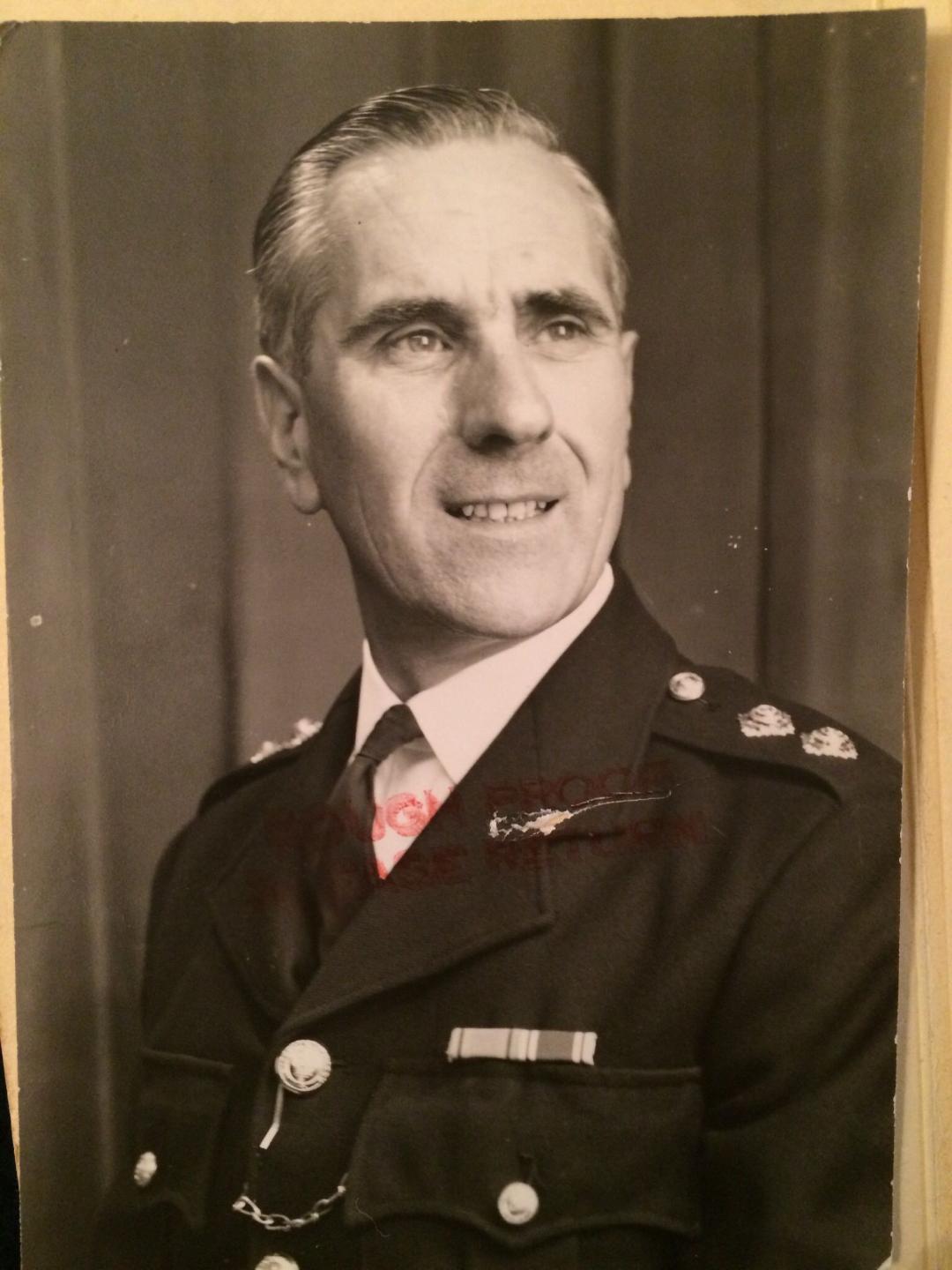
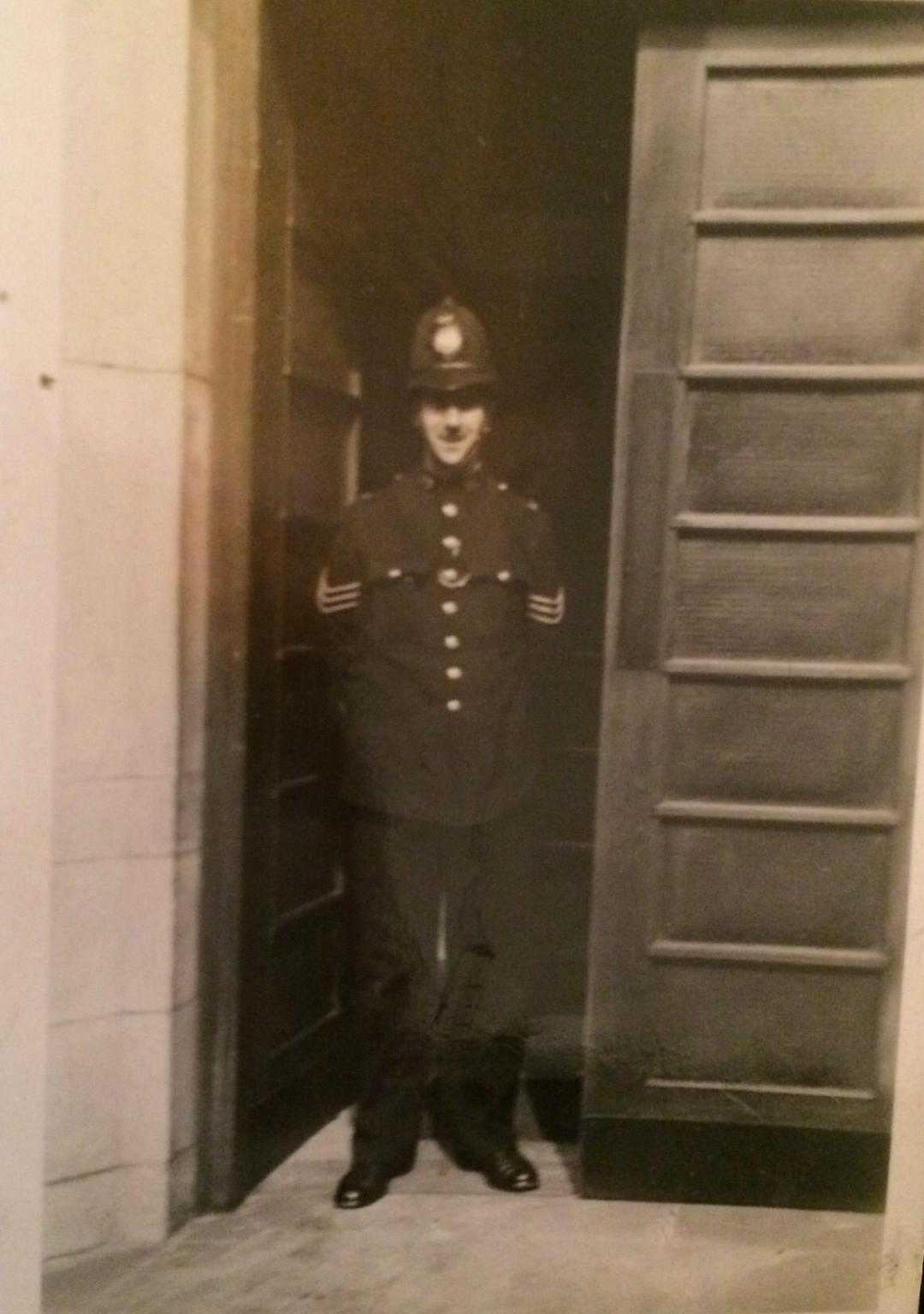
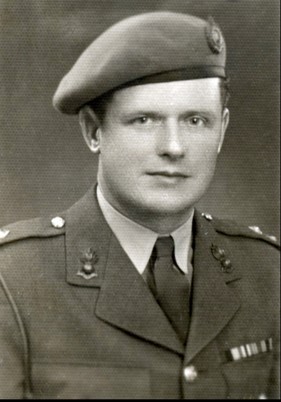
Jesse Rance, Police Officer during the second world war
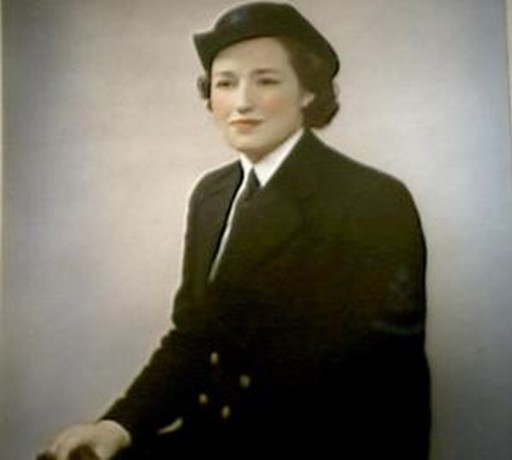
Olive in WWII WREN uniform
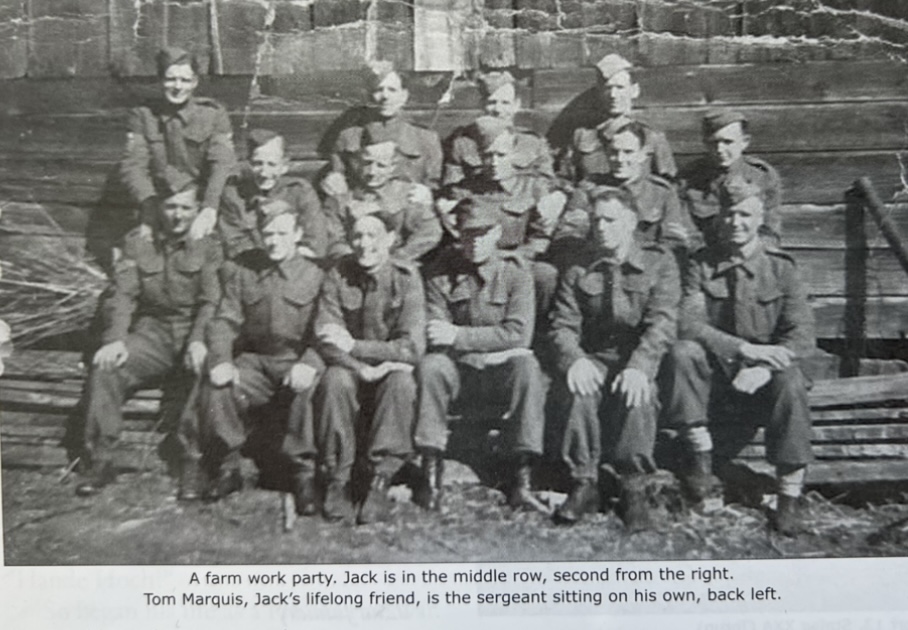
POW Farm work party incl Jack Stansfield and Tom Marquis, WWII
Tom Marquis
Fighting Through Podcast WW2 Episode 105 – Tenth Anniversary PART TWO with more second world war stories.
More great unpublished history!
Intro Passage 1 wwii desert memoirs
I glanced around at the faces of those on the Bedford, they were beginning to show both tenseness and irritation. “For Christ’s sake, cut out the heroics mate” said one of the lads.
Then from the officer, “Let’s get out of here quick!”
Intro Passage 2 wwii animals at war memoirs
We received a novelty in that campaign that had never previously been provided in the six Years of WW2. It was a carrier pigeon!
Intro Passage 5 ww2 WRENS history
My grandfather was once cycling in for a night shift. He was half way there when he glanced down to see that he’d not polished his shoes. Off he went back home to shine them up before cycling back to the police station. Little did he know how shiny shoes would save his life.
Welcome back
I’m Paul Cheall and I wish you a warm WW2 welcome back to this tenth anniversary party. Part Two episode 105. If you haven’t hear Part One in Episode 104, you might like to listen to that before this one.
Lots of old and future favourites coming right up.
No time for dreams
Episode 94/95 featured memoirs of British Canadian Bob Metcalf. No time for dreams was a soldier’s six-year journey through World War II. By a Green Howard. I’ve dug out a few short stories from this memoir which you won’t have heard before ..
I’m reading direct from the pages so please excuse any paper noises:
Jon Watson –Helensburgh, Scotland (Mincemeat)
The survey said:
Your podcast is the audible equivalent of comfort food Paul. I love seeing a new episode pop up, especially as there doesn’t seem to be a fixed time frame for the releasing of episodes? Not that it bothers me in the slightest as I’m sure it’s when you’re able!
My favourite episodes are focussing on the small scale, individual stories of WW2 which you seem to specialise in.
Jon thanks for that and the comfort food comment – it’s just such a story that you’ve given me! Oh boy. Here it is:
As a relatively young person (41….yes I’m still saying I’m relatively young!) then I feel as if the topic of WW2 is becoming less prominent in people’s minds. This is a shame - so to be able to ‘connect’ with you through your podcast means a lot to me. I found out I’m going to be a dad in early January, I am already playing some of your episodes to the wee one in their mums tummy! Hopefully he or she will be passionate about preserving history as well.
Thank you for all that you do Paul.
Follow up:
Well that was way back in 2023.
Our son George was born on January 3rd this year. He was born with Cystic Fibrosis which was a huge blow but we’re 5 months down the line and accepting of it. He’s our hero and we honestly couldn’t be happier! He was named after my dad and was even born on the same day, 87 years apart…..how about that!
I’ve been flying him around the living room to the sound of Merlin engines already so I’m confident we’ll have a history buff in the making. Hi George if you’re listening!
Sound courtesy of JimSim on Freesound - Hurricane and Spitfire dog fighting
My grandad
My Grandad was Jesse Rance (although known to his friends & family as George - clearly a name which runs through our family!). He wasn’t in the army but served in the Metropolitan Police between 1936 - 1966.
He served in the boroughs of Hackney & Tottenham through WW2 and obviously endured the blitz. What a tough beat to patrol!
Dirty shoes:
He told my Granny (his wife) about a night shift that he was once cycling in for. He was half way there when he glanced down to see that he’d not polished his shoes. Off he went back home to shine them up before cycling back to the station (and I imagine the return journey was made at a slightly faster pace!) no doubt running late by then. As he approached the station, his journey was prevented by a recent air raid which had destroyed the majority of the street directly outside….exactly where he would have been if he hadn’t gone back to polish his boots! He was an officer of high standards so would always say how ironic it was that a pair of dirty shoes saved his life!
Spooky or what??!!!
Listener you think that’s the end of it don’t you – just hang onto your army boot straps for a minute – there’s more.
Jon continues: My grandad retired an Inspector but, in 1943 was still a Constable which made him fair game for any duties that were cold and miserable. So it was to this end that he found himself stood outside the doors of Hackney Mortuary for a number of nights during 1943.
He was never told the reason why until years later, after the war. He was as surprised as anyone to learn about the story – because it turns out
TARA
my grandad was one of the police officers that stood guard of the corpse
in the run up to Op.Mincemeat….insignificant to most but for me this encapsulates everything I find so fascinating about WW2.
Jon – insignificant? insignificant?!! Wow that is one of the best stories we’ve had on this show by a country kilometer. I couldn’t stop laughing about it when I first read about it. I can’t stop now. God – just pause for breath …. Listener now you know why I did the bit on operation mincemeat earlier – how crafty was that!
Later on, and towards the end of his service, my grandad would be heavily involved with the gangs of the East End in the 50’s & 60’s; the Krays, Richardsons etc. That’s a story for a different podcast though.
Jesse passed away a few years before I was born but I’ve always felt such a strong connection to him regardless. I’m a serving police officer of almost 23 years now, I’ve never polished my boots, just in case!
Jon Watson
Helensburgh, Scotland
And Jon has sent me a couple of pics of his grandad – see the show notes. One’s in full uniform outside the station, Dixon of Dock Green style. In fact he’s also featured in the episode artwork.
PS from John
My Great Uncle was Harry James. I’m still researching his military history but he was in Wingates Phantom Army in Burma,
was shot by a Japanese sniper
and made a captain on the battlefield!
I’ll send you over something more detailed in the fullness of time, photos included.
Jon that’s brilliant TY so much for writing in. You’ve lefty me breathless. And I know little George is good because I just checked with you before recording this episode. Hi again George – this episode is dedicated to you! I hope you enjoy researching your family history when you’re older.
Wilf Shaw
Our survey said:
Anon Derby wants more of
Still trespassing! AKA Wilf Shaw
Graeme Hollingsworth County Durham
Wilf Shaw
By way of introducing Wilf in this episode I’m going to briefly return to our favourite Dunkirk ship.
Lady of Mann
The lady of man ferry and captain Tom woods at Dunkirk have been covered several times on this show and you will have heard quite a bit on the previous episode with the Matt Cain interview.
And here’s a soundbite from it just to set the scene for the story that follows:
Capt Woods reported, as they were leaving Dunkirk harbour on 31 May:
“German planes were coming over, their bombs dropping the other side of the pier about 40 yards from us and we had seven holes made in the starboard bow close to the water line, also three lifeboats holed by flying shrapnel from the shells. Captain Tom Woods
Zilken …
This next segment is one of my favorites because it's a bit of surrealism on board the rescue ship after the tired and hungry troops have fought their way back to Dunkirk to finally get on board the ship which had originally brought them to Dunkirk in the first place with the BEF.
This is two old veterans. Reminiscing by correspondence years after the war. Wilf Shaw and his pal Fred Zilken.
So this is 31st of May 1940 as the allied forces retreat from the powerful German Blitzkrieg invasion.
“I just thought Wilf - another boat I was on - the Lady of Mann a cross channel steamer. We (George Suzuki and yours truly) went on it, with the rest of the Green Howards from Dover to Calais sunning ourselves on deck in early May '40
and blow me after our hasty withdrawal, down to the beaches at Dunkirk we got onto - after much bombing, strafing and shelling - we staggered aboard … yes, the Lady of Mann! This time we kept off the top deck and got ourselves - George and me and Arthur Garner - down below. The boat was rolling from side to side as the bombs kept straddling the ship - didn’t worry George though, he went and had a wash and brush up! The rest of us had a jam sandwich and a cup of tea!
Wilf Shaw North Africa – new story
Moving now to a segment from Wilf’s unpublished memoirs that you haven’t heard before.
Wilf is in the desert of North Africa … around 1942.
Where were the enemy? One might be tempted to inquire. Well, they were there alright, some ten to fifteen miles away to the west. We did get a glimpse of them on a couple of occasions, when we accompanied a South African armoured car on a reconnaissance patrol to ascertain enemy locations, strength, and whether on his toes or not.
We were in a couple of three ton Bedfords, 15 or 16 to a truck, plus our platoon commander 2nd Lieut Claude Hull and the platoon Sgt plus the section commanders of whom I can only remember my own in No1 section, L/Cpl Dean, a Londoner. The armoured car proceeded west at a fast speed for what seemed hours, the CO occasionally signalling us to stop before scanning the barren desert in front from his vantage point on top of the armoured car through his field glasses, then on again. The terrain altered little, flat stoney ground with scrub dotted here and there, now and again a cairn of stones piled around a wooden pole which usually included a map reference number which the commander of the armoured car would check, then move on for perhaps a couple of miles, before going through the same routine again. We were all beginning to wonder if there was any enemy to find when the armoured car came to a sudden stop.
“Debus!” Came the order and we deployed either side of the trucks and awaited further orders. “Ten rounds load!” was the order. We loaded rifles and waited; we could pick out the outline of a military vehicle and men moving around; they would be roughly 800 yards away. Our commander was observing things through his field binoculars whilst at the same time giving a running commentary in as calm a manner as he could muster, “Looks like another patrol; yes it’s Jerry alright; looks like they’ve spotted us, they’re getting a field gun into position ...
“Embus!” Came the order and we quickly scrambled back on the Bedfords; whether to show us he was not quick to panic I don’t know, but we seemed to be hanging around much too long for comfort, “They’re starting to load now” he said, the binoculars still in position and still maintaining his apparent air of nonchalance; I glanced around at the faces of those on the Bedford, they were beginning to show both tenseness and irritation.
“For Christ’s sake, cut out the heroics mate” said one of the lads.
Then from the officer, “Let’s get out of here quick!” The drivers of the Bedfords didn’t need to be told twice, off we shot crashing through scrub and disregarding the bumps, all the while expecting to have shells bursting around us. They wouldn’t have done much harm to an armoured car, but a direct hit on a truck full of Infantry would have caused carnage.
Apparently this was what was known as patrol activity. Personally, I think we were all secretly relieved to be heading back to our own lines, the curiosity of the patrol commander having been satisfied and discretion being subsequently regarded as the better part of valour. There were of course occasions when patrols were intercepted with skirmishes taking place, perhaps a casualty or two, or maybe prisoners taken by one side or the other. This, however, did not happen on any of the occasions when I was personally involved.
This type of journey in 3 tonners was never very comfortable, a hard bumpy ride with dust being thrown up, resulting in arms and faces being covered in a layer of fine sand with clothing full of the stuff. There was seldom the opportunity to wash clothes; as much dirt as possible was brushed out and removed by shaking. As for oneself, you could only hope that it wouldn’t be many days before the mobile showers got around to you.
These “Mobile showers” were set up and operated by the Royal Engineers. Every man stripped off and waited his turn for one of the twenty or so cubicles to empty. It was all done in typical army fashion, arranged only on the orders of a senior NCO, and strictly to time, say, 3 to 5 minutes allowance per man. This might have been workable under normal circumstances, but things never quite worked out as planned; when the order was given for the showers to be turned on, the idea was that everyone would go under the shower at the same time and would use exactly the same amount of water.
We all went under at the same time alright, but for some reason, the temperature varied dramatically, freezing cold one minute then scalding hot the next, so that all along the line of cubicles men were suddenly leaping out yelling and cursing in typical army vocabulary; the result of all this was that a satisfactory shower was impossible. You chanced an arm or a leg in a gingerly sort of fashion, all the while half expecting the gushes of hot scalding bursts between the rather more bearable cold shocks, and before you realised it, the order was given to leave the shower, dry and get dressed again.
I wrote previously that the army stripped you of privacy – in the early rookie days, things like getting undressed for a communal shower and having to expose whatever it was that nature had bequeathed you to the gaze of curious eyes was an embarrassment to say the least, but after a while, even the most retiring of those amongst us, got down to the job of having to live together.
There you go – some precious details of army history that help paint the picture of desert warfare.
Ty to the late Wilf Shaw.
WRENS
Women at war in general has been another popular topic picked upon by some listeners.
I’d remind you of the hugely entertaining mutual mickey taking that went on between the Americans and Brits in Episode 33 with Wartime Recipes and Wrens based on the short memoir I picked up in a field sale – Do March in Step Girls. A Wren's Story, by Audrey Johnson was the memoir of a WREN in a signals team during WW2, based in N Ireland.
Here’s just one short segment to remind you of what’s on offer in Ep 33.
“My boyfriend Rick made me laugh a lot, and I began to get used to his unsophisticated humour.
All the members of his mess had already accepted me as Rick's limey gal, making me feel welcome and rather special.
They were surprised that however much they ragged me about dear old England, they never got me rattled.
I just came back at them, turning their insults to England's benefit, enjoying the twist of words.
“You goddamn limeys stop even in the middle of battle to brew your precious cups of tea - And a little finger was crooked in mid-air.
And that of course is why we win most of our battles.
Perhaps you should try it.
Coca-Cola is pop for children, you know.
In Rick’s country, they thrived on a comeback.
You're all still living in Nelson's time over here.
Why, the men in your ships have no room at all.
You put your guns on first, then your poor damned sailors are crammed into whatever space is left.
We don't work that way on our fighting ships.
I know (I told them), ice cream machines and Coca-Cola fountains first, then men, then guns.
We have noticed the results of this attitude.
You were no doubt having the soda fountains repaired when the Japs flew in over Honolulu.
I was made the first honorary member of the mess and learned to eat steak with bread and butter, peanut butter and jam.
I had ham with pineapple for the first time and liked it.
Apple pie went nicely with cheese and I began to take butter for granted just as I had done before the war.
This brings me to another Wren’s memoir I found on BBC ..
My First Posting
Olive the WREN
Dundee, Scotland
After going through the terrible raids on Sheffield, and the fact that I would probably be called up anyway, I decided to join the WRENS.
Everybody was talking about joining up, - and my friend said about doing it and I think we just got together and decided to get on with it - as I was coming up to 18 and at 18 you were called up anyway and this way I got a choice.
Otherwise I could have ended up in the ATS, the WAAF, the Land Army or been trained as a nurse. I don’t know why I wanted to be a WREN - I think it was because everyone thought it was the best service, and we knew some fellas who had gone in the navy. It seemed glamorous at the time!
So on Saturday 16th August 1941 I left home to travel by train from Sheffield to Dundee up in Scotland, carrying one small suitcase containing only the clothes that were allowed on the list we received when we signed up - including two pairs of navy bloomers! The train was full of troops so it was standing room only. People were sitting on the floor, in luggage racks but everyone was very cheerful and helpful. Going to the loo was almost an impossibility though as that too was being used as a seat! I finally arrived in Dundee and was taken to Mathers hotel where the beds hadn’t arrived so we had to sleep on palliasses arranged in rows on the floor of the ballroom. Bunk beds eventually came and to be honest they weren’t much better - there were no steps to the top and the bottom was rather airless and claustrophobic so I didn’t like either. But you had to get used to it as with everything else in the war!
We had meals in a large room canteen-style, and on the whole the food was quite good. But soon we became aware of bits of foreign bodies lurking around - cockroaches! We complained and got told that everything possible was being done to get rid of them but not to worry as they weren’t poisonous and would do us no harm! We found them everywhere - breakfast, baked whole in bread, bits of them in mashed potato - but you were so hungry you just ate round them and picked them out! It soon became apparent where they were living - in nightly fire watching duty you had to patrol the whole building including the kitchen and the basement and the whole place was alive with them, scuttling away from the light of our torches.
I had to quickly learn Naval jargon - the bedroom was a cabin, the kitchen a galley, the floor was a deck, a corridor a gangway, rubbish was gash etc - as if we were onboard a ship. Also certain surnames had nicknames too, for instance anyone called Miller became Dusty, a grain miller being covered in fine flour, or Smudger Smith, owing to a black smith being covered in smudge or soot, and so on. We were soon fitted out with uniform which needless to say didn’t fit very well so it had to be altered either by us or a local tailor. Hats were soon taken to pieces and crowns were taken from brims to give them a more fashionable shape. Stiff collars left red weals on our necks and were very painful until we toughened up. Tying a tie took time to perfect as well, and we obviously had to carry gas masks with us at all times.
After we got our uniforms we got squad drill practice several times a week until we could march in step and swing our arms in rhythm which was very hard work. Later I had to learn to take squad drill practice which was even more difficult! We also had lessons in rifle shooting.
Occasionally we went to local dances and there would be lots of Poles and Dutch men there, but we all had to back by 11pm and have signed in - and the door was locked dead on time which resulted in many a run back in the blackout - one girl bumped into a lamp post and cracked her front tooth which was very nasty.
We all got tetanus jabs as well which left me with a stiff arm for a couple of days.
Every day for six months I attended wireless telegraphy school. We were taught to send and receive Morse at speeds up to 25 words a minute which is very fast and extremely nerve-wracking and stressful.
A local family - Mr and Mrs Blythe and their daughter Margaret - often used to invite several WRENs for the day on Sunday. The hospitality in Scotland was fantastic. Margaret eventually married a Dutch man.
During this time we’d get letters from home but everything was opened up and examined and if there was anything in it about the war it would be crossed out with red pencil.
My first posting, along with three fellow WRENs was to Oban. We were quartered in the Palace Hotel which was right on the front, in a convenient place to walk every where in the small town. It was a wonderful viewpoint to watch the spectacular sunsets over the island of Kerrera.
I shared a cabin with several WRENs and it was a more pleasant way of life than before. We took over from several sailors, who after we’d had a few weeks of training, were then posted overseas. We worked at the nearby Station Hotel which had been requisitioned by the Navy. A mouse lived in the office and it was good company at night running up curtains, and we used to encourage it by bringing in cheese!
There was plenty of beautiful countryside and I often joined groups walking over the hills or going by ferry or rowing boat to Ganavan Sands, a beach around the bay. Interesting trip, watching the seals bobbing up and down in the sea - and the Sunderland and the Catalina flying boats were also in the bay. Often we would go to the Church of Scotland Forces canteen which was a special meeting place for all the forces in the area including the R.A.F. and the W.A.A.F.s. This was organised by local ladies. There was also one small cinema in the town.
After a smallpox scare, they brought in compulsory vaccinations - I was ill for 2 days.
After a short time I was posted to Greenock on the River Clyde. I soon settled into Stoneleigh House, a large stone built property at the end of a long drive. I shared a cabin with 19 other WRENS - and it wasn’t very peaceful after night duty as there would always be someone around during the day when we had to sleep. On the walk to the wireless office we would see liners used as troop ships, aircraft carriers and other naval ships anchored in the river. There was great excitement one day as the tugs successfully put a smoke screen round the ships to hide them from enemy aircraft on their way to bomb Glasgow. The troop ships always went full speed ahead on their way back and forth from Canada and America to out-distance the U-boats that were always waiting at the mouth of the River Clyde.
Men from these ships would come to the dances we held at Stoneleigh, but unfortunately any date made rarely materialised as they would immediately be drafted somewhere else, or unfortunately killed. One day I joined a party of WRENs invited aboard an aircraft carrier which was very interesting. We were given a tot of the ships rum which was strong stuff - one sip was enough for me!
I enjoyed the work in Greenock which was mainly ship to shore Morse code. There were 4 to 6 workers in the office, including one sailor and we’d go to dances held in the hall in Gourock the next place along the river - all the Scottish reels were so exhausting but great fun and it was nice to walk home to cool off!
I was promoted to Leading Wren so had one anchor, known as a hook, placed on my arm. Our hats had been changed to sailor style which were more comfortable and stylish. I’d occasionally be able to go home on leave - but the journey could be scary. I remember once the train was stopped and the lights put out for quite some time as an air raid was imminent - thankfully we were able to carry on eventually but we’d been in a tunnel for hours as an enemy plane must have been following us.
Never was I scared to walk alone at night - it was sometimes necessary after leave to walk from the station to quarters and you’d always get someone saying “hello Jenny (the nickname for all WRENs) do you want some help with your bag?” So I was very sorry to leave at short notice to go to Liverpool. My laundry was out so I think I had the shirt and collar I was wearing and nothing else! You were literally told one day and off the next! You grumbled but you did it - I think if they’d said go and work for a week in hell we’d have gone. Everybody obeyed orders - I can’t imagine people these days doing it.
Censorship
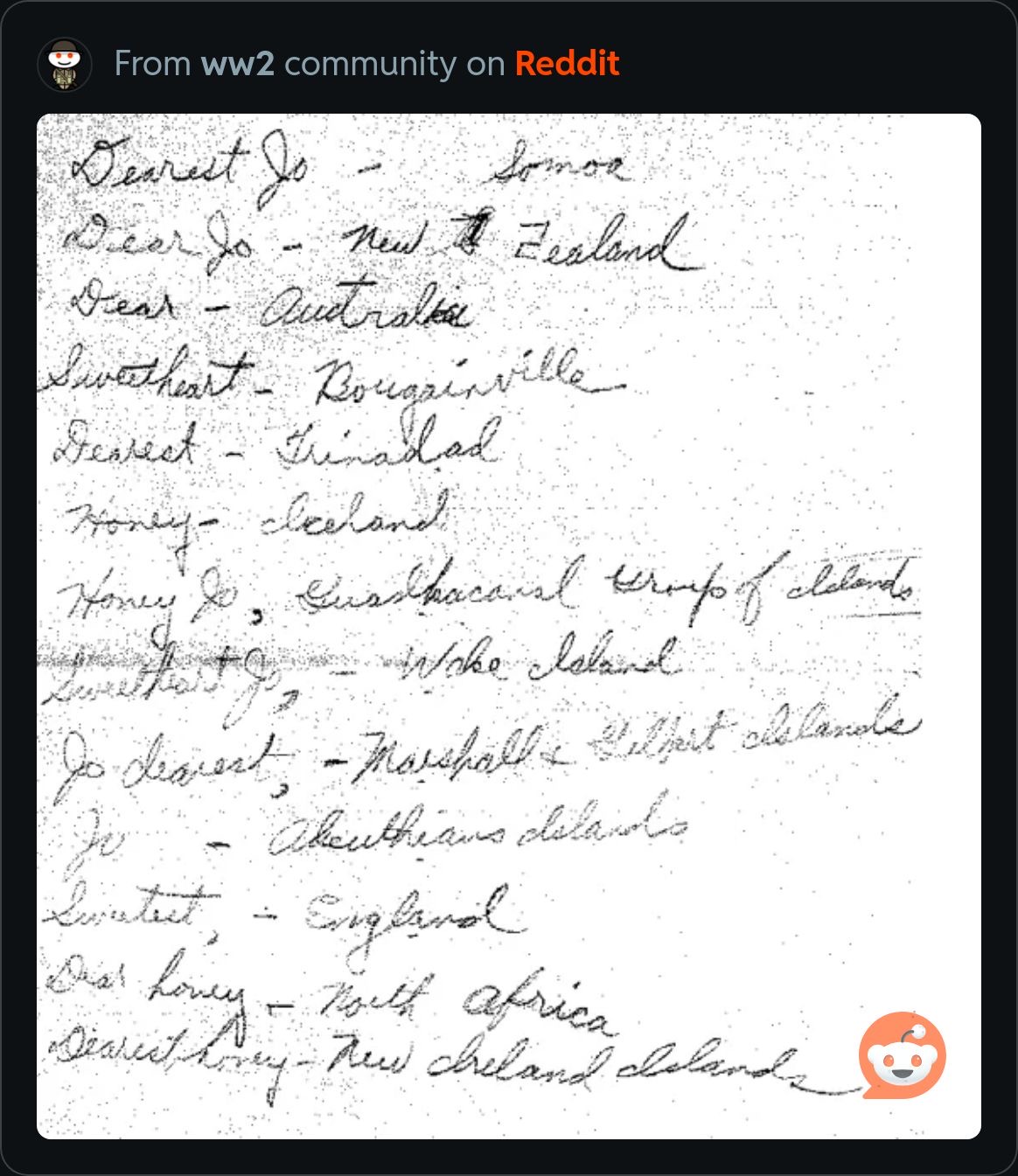
It's interesting what was said about the letter censorship in this feature. I know dad’s major petch had to censor the soldiers letters before they went out. I found a few things on Reddit about this topic which are worth sharing.
Tom in NJ said:
My wife's grandparents had this code to get around censors and he could let his wife know where he was. Tom NJ USA
If it says
“Dear Jo – then he was in Samoa
Sweetest – then it was England
Dearest Jo – was New Zealand
Dear – was Australia
And so it went on with a long list!
Honey Jo
Dearest
Sweetheart -
Honey -
Sweetest Jo –
And more, all meant different places.
Honey Jo - Guadalcanal Group of Islands
Dearest - Thailand
Sweetheart - Bougainville
Honey - Iceland
Sweetest Jo - Wake Island
Jo Dearest - Marshall Group of Islands
Jo - Aleutians Islands
Dear Honey - South Africa
Dearest Honey - New Zealand Islands”
Other contributors to this sub were:
Bgze
My great-grandfather sent letters to my great-grandmother during WWII, and he would change her middle initial on every letter to eventually spell out where he was at, which happened to be Belgium for a series of letters.
Country fresh
My great granddad did this as well. I cant remember all of em but I remember his code for guam was "is sandy (his daughter) enjoying her chewing guam?" 😂🤣 One of the Pacific islands would be a reference to pineapple upside down cake and another place was coconut cream pie.
Reviews
Review 1 - CharlotteTurts - More ww2 memoirs
Hey Charlotte … CharlotteTurts. Are you listening? Charlotte you posted a review recently and I’ve got to say thank you soo much!
“Totally addicted
There’s literally nothing else unmatched.
It’s a joy to hear Paul, who’s so passionate, share these materials and put such a personal, individual lens on wartime experiences. The other WWII podcasts I listen to now feel one dimensional.
Paul, you’re up there with Dan Carlin for me! Amazing, intricate, painstaking work, thank you for what you do!
Charlotte – I can’t stop smiling - thanks so much for that. I feel so humble to be compared with Dan Carlin.
So much so I decided to ask one or two well-known podders for a reaction to my show. And blimey one or two wrote back. I’ll read them out to you.
Angus Wallace
Hello everybody – I’m Angus Wallace, and if you can spare a dollar or two for my show, then for this month only give it to Paul instead. But please don’t buy him another bloody Calvados cos I’m sick of him going on about it. Damn good show though Paul. Especially episode 21 where I interviewed you – back in 2017. And if you haven’t heard it yet, my latest episode is all about the famous Pacific battle of midway in 1942 – check it out.
Steve Erskine
Hi Paul – Steve Erskine here from the Green Howards museum up in Richmond. Lots happening around the Green Howards museum – check it out online. Your pod is absolute gold mate – just pure gold. Keep it up!
James Holland
Hi Paul, James here, great show buddy. Time you got out walking the ground and inspecting the materiel more, but that Dunkirk little ship thing you did recently was splendid. Inspired me go out to get my own hooter for the Citroen. BTW did I tell you about my latest book – it’s Cassino 44 about the battle for Italy. There’s a link in your show notes – at least there’d better be, or I’ll send Al round to sort you out. Cheerio!
Dan Carlin
Paul – I got one question for you – in all these years, with all these shows, and with the incredible combined force of the enemy armies against you, how do you think you’ve survived in this dog eat dog world of history podcasting? Was it the might of the Japanese empire on your tail that pushed you on? Was Adolf Hitler himself kicking your ass in your worst nightmares? Maybe it was your acquiring mastery of those hard to pronounce words like Brisbain, Canberra and Wehrer tüchti gungs lager that gave you the motivation to compete with all those other shows?
And all you need to do to be perfect is to just remember one thing – it’s damn lieutenant, not leftenant. Lieutenant, not leftenant! Left Tenant is a half drunk glass of grotty British beer on top of the bar. Remember that! And it’s Heinkel. Not Heinekel! Heinekel is also a grotty British beer!
Keep it up buddy, we’re all rooting for you.
Thank you guys, I am humbled by your support. And how nice of Dan Carlin to take time out of one of his magnificent six hour episodes to drop me a line. What a great bunch of chaps (and chapesses) we have in the world of second world war history.
And thank you Charlotte for such beautiful words, nay prose, to describe my efforts.
CharlotteTurts Jul 29, 2024
United Kingdom Apple Podcasts
Tr
Several people kindly left show reviews in various places:
Review 2
Beautifully and movingly read, sometimes bringing a tear to the eye. CDT757
Aug 28, 2024, 3:25 PM United Kingdom Apple Podcasts
Review 3 Ron Kidwell, with built in search optimisation
Simply the Best podcast regarding WWII (world war two).
Review 4 Herod Lowery – hope your hip has recovered Herod
April 21, 2024 on This Website
It's the unfiltered words of the great men that came through in tough times. Like Paul, I am the son of an American World War 2 veteran. My father went from Omaha Beach (age 19) to Kassel, Germany (age 20) and Paul was ever so kind to talk about my father's experience in Episode 70. And by the way, Hail Britannia!
On the FT website:
As we say in the USA, AWESOME!!!
My father, seven uncles and one great uncle were in WWII, all in combat and they all came back. My dad, Herod Lowery, drove a big Ward LaFrance tank wrecker fighting the Germans. He landed in Normandy at Omaha Beach on June 21 and on VE Day, he was in Kassel, Germany. The stuff you put up here is just the greatest.
June 10, 2021 by Herod Lowery on Website
And many thanks for the Calvados Herod – I hope your hip replacement operation has gone well and you’ll be back jumping in and out of the trenches dodging bullets in no time!
Review 3 Shakkers on Audible said
Previously untold stories from the 2 World Wars.
This heartwarming podcast is a true labour of love by one of Yorkshires finest sons, Paul Cheall ... it honours the wartime lives of regular men & women who, by their courage commitment, honour & character showed themselves to be anything but ordinary.
This podcast will surely reward all those history buffs who enjoy hearing previously unpublished Wartime stories of those who somehow found themselves in the thick of it & yet lived to pass on their reminiscences to future generations.
Cracking stuff.
Shakkers on Audible
Feedback 1 German Lady as per IPA
Possibly one of the most humbling and rewarding pieces of feedback I’ve ever received was one lady who wrote in after the series of German episodes we’ve had. To my eternal shame I just cannot find the correspondence so I can’t share her name with you. But I’d feel even worse if I didn’t at least tell you what she said. Here goes.
“I had a Great-Grandfather who fought in WWII...for the Germans. Thank you for helping me get to a place where I can respect him. Please know the time and energy you put into research for your podcast shows and puts your show head and shoulders above other podcasts.
I wasn’t planning on saying this in this anniversary episode because there has been so much to share that’s great but I’m going to make an exception
HGIT?
Thank you guys, all of you
I hope it’s OK my allowing myself this brief session of self indulgence. It’s just my way of recognising people’s recognition. Reminds me of a little routine I used to have with my dear old Mum.
Anyway, the next few comments are leading towards another ww2 history segment:
Feedback
Feedback 2 Tim Rainville Canada – long standing listener
I have enjoyed the veteran accounts, particularly the British sniper interview, but recognize that those opportunities have mostly come to a close.
Most of us know the general history pretty well so it's the personal anecdotes which are most compelling.
Feedback 3 Darren Merritt - South Australia
Just keep up the great work. How good is that
Les Cook
Feedback 4 Eric Scott - Washington, Tyne and Wear
I really enjoyed Cpl Leslie Cook and KEN Cooks memoirs. Like all who served through WW2... true heroes. I was on the edge of my seat listening to D-Day through German eyes. Like all the episodes I have listened to, its a lump in the throat moment.
Happy to say. I wouldn't lose any of it. Its great to know the effects of war from all angles
Feedback 5 Chase Stirm Billings Montana USA
I really appreciate what you do. It makes my long hours of sitting in a truck pass by much easier.
Likes Leslie Cook
Sponsorship news
Stephen Rubin bought me a coffee.
I can't thank you enough for enriching my walks listening to your real-world war stories of such brave men who fought for our freedom.
New York City
John D. Peebles has recently sponsored me with a regular contribution on Patron
Paul, I am from Mobile, in Alabama, on the Gulf Coast. I have enjoyed your podcast immensely: thank you so much for this work; a labor of love I am sure. My father was an army infantry officer in the Pacific theater, seeing action in New Guinea and the Philippines. As per usual, he didn't speak much about his experiences while I was growing up, although we were surrounded by remembrances of the war, and just about every adult male you encountered was a veteran, and my mother would speak in hushed tones about some of them, either as to the horrific sufferings they endured, or the noble acts of heroism that were attributed to them. But my father was silent on the subject. In later years we got some of the more humorous, or self deprecating tales, but nothing of some of the truly unpleasant times I know his unit went through. In any event, keep up the good work, and should you run across any more Pacific memoirs, there is a large segment of your audience that would be particularly interested.
John Peebles
Which brings me to …
TR
Corporal Les Cook and the pigeons
Australian Leslie Cook was in the second 14th. And he served in Greece, Crete, Kokoda (the New Guinea Owen Stanley campaign), Borneo and in the occupation forces in Japan.
Les entertained us with a great many stories of his wartime adventures whilst serving for the AIF. His output was prolific. Just use the search bar or the episode shortlist at the web site if you want to re-visit him. His adventures start ep 64.
And Hooda thunk it … I checked with Les’s family as to his welfare and SIL Tony wrote back:
Hi Paul.
I hope you're well. Les is still hanging in there. He got to 101 last January.
He asked me to send on a couple of other bits and pieces.
Tony
Here goes:
Wartime messages
And this is a new Les story.
It is said that carrier pigeons - also known as homing pigeons - had an inbuilt ability to find their own home even if they had been taken a long way from it in any direction. When released from far away they would immediately and rapidly set out for home. I don't know if any other bird had this capability, but the pigeon certainly did. It has been said that during WWl, before the advent of portable radio, the pigeons were often used to send messages from the forward areas to headquarters - the handwritten message being attached to the pigeon's leg.
Heavily supported by US naval and aerial forces the Australian assault on the Japanese base at Balikpapan in southern Borneo began on Sunday the first of July 1945. The Pacific war unexpectedly ended a few weeks later on 15 August 1945. This occurred as a result of the US dropping a nuclear bomb on each of the Japanese cities of Hiroshima and Nagasaki, both cities being utterly destroyed. We were told that the Japanese had surrendered unconditionally, except that there would be no penalty for their Emperor, Hirohito.
We received a novelty in that campaign that had never previously been provided in the six Years of WW2. It was the carrier pigeon! We were told that the reason for this was that aerial surveys before the landing showed that the Japanese had excavated an anti-tank ditch parallel with the coast and only a few metres in from the beach. The land was very flat, and the entire ditch contained water.
Possibly the base of the ditch was below sea level. Balikpapan is a mineral oil producing area. It was thought that after the first wave of troops landed the Japanese could flood the ditch with oil and set it on fire cutting off the first wave and forming an impassable line. The pigeons would then be used to communicate with the ships if this happened.
For this reason also we were each required to carry additional ammunition when we landed in case it did happen. I was a Bren gunner and the gun plus a few loaded magazines, a couple of hand grenades, and a few days food would have been quite heavy. My "'extra" was a package of several 2 inch mortar bombs. and the total weight would have been between 15 and-20 kg. I carried the gun on my left shoulder and the package of mortar bombs was encircled by my right arm. The water was about waist deep where we landed and the additional weight and handling the additional package was a bit of a problem. The extra ammunition was immediately left on a spot just behind the ditch.
In the event, the fire did not happen so the pigeons were not used. Understandably, the extra ammunition was used before the supply ships had created the on-shore supply base. I don't remember if we just released the pigeons after a few days or if they were taken from us in their cages. Following the end of the Pacific war in August 1945 we spent the next few months attending to the Japanese Prisoners-of-war task in Balikpapan and on the island of Celebes. The Japanese were very cooperative in this.
In addition to that we were required to create and maintain a state of peace in the city of Makasar and elsewhere on Celebes as the Indonesians struggled to gain independence and be free from the control of Holland. Then some of us joined the British Commonwealth Occupation Force and went to Japan.
I came home in February 1947 and was discharged from the AIF - Australian Imperial Force.
And this is a random bit of poetry …
Balikpapan poem
On the first of July as the dawn hastened by and the sun rose with clocklike precision
The sons of Japan at Balikpapan met the boys of the Seventh Division
The cruisers at sea sung their death melody, the LCls raced for the shore
And the jungle-clad blokes with their grim, uttered jokes prepared for the battle once more
Then onto the sand with rifle in hand they challenge the Rising Sun
And the Nippon awakes to the courage it takes to gain fame as the Seventh has done
The onward drive through the mud as they strive to force the retreat of the foe
Danger daunts not, men, who give all they've got as through tropical jungle they go
And what if they could, if only they would, tell the thrills of the Borneo trail
But all that they ask is the heart for the task for they know that the Seventh won't fail
I can actually hear Les’s voice in that when I read it.
And blimey would you believe I’ve just found another newspaper in my collection with a story about Kokoda! It’s a headline that Les would have relished and it leads onto other articles, so I’m just going to go through them for you.
I just need to refresh my brain and yours as to what Kokoda was about.
The Kokoda Track campaign was part of the Pacific War of World War II fought in 1942 in the Australian Territory of Papua, New Guinea, an island just NE of Australia.
The Japanese landed on the North coast of the island with the objective to seize Port Moresby in the South by an overland advance following the narrow Kokoda Track over the mountains of the Owen Stanley Range.
The Japanese advanced to within sight of Port Moresby but withdrew on 26 September because they had outrun their supply line and had been ordered to withdraw
Following the unopposed recapture of Kokoda itself, half way up the trail, a major battle was fought on the trail in November, resulting in a victory for the Australians.
The Japanese forces in the North held out until January 1943.
Long time listener Sue Polidoro from Melbourne, Australia once
wrote in with some very precious family history and I think it’s deserving of another listen. You heard it first in episode 64.
Hi Paul,
I have been listening to your podcasts and wanted to say thank you! Never should we forget the Greatest Generation, my grandfather fought in both world wars, he was not born, in Australia, but Germany and from Russian and Eastern European descent.
My maiden name was wicks, the name my grandfather chose so he could join up for both world wars - his real name was Weiss - so many changed their name - especially those with Jewish or German names. My uncles and grandfather are all buried with the false name, which they had kept it after the war,
On the breakout of the Second World War he joined up on the first day. And two of his sons joined a year later. My Uncle Jack Wicks fought in New Guinea with 2nd/7th Commando Squadron.
Only a few stories have come through because all the men in the family would not speak of war.
My aunt Margaret, Uncle Jack’s wife, walked in on him and a war mate reminiscing, but they stopped talking when she entered - but she begged them to finish. She stood in terror wanting to know what happened – the conversation went something like “Remember, Jack, when we were in the jungle and you and that Jap walked straight into each other and bumped heads? My Aunt waited with baited breath for the answer … my Uncle was forced to answer … so looked at her and said “Well I am here and he isn’t”
Both men did not say another word till she left the room.
Sue adds - This is a letter sent to us by my Uncle Jack Wicks’s army mate. It details the story about his appendix operation and gives us an insight into the fighting.
John Peter (Jack) Wicks
- stationed New Caledonia from 23.12.41 to 3.8.42 to protect the nickel mines in case of a Japanese landing.
Caches of food and ammunition were buried so that a sustained guerilla action could be fought against the Japanese if required. In mid February 1942 Jack became sick and his C.O, Cap't Ken Gill, sent him to company HQ some 80 miles away in the only truck available.
The M.D. Doc Patrick, found Jack to be suffering from severe peritonitis and operated immediately in a tent, with the C.O holding a torch and a tilley lamp. In spite of this, a week later, Jack was back in C Company because he wanted to be with his mates so that he didn't let them down.
3.8.42 returned to Australia for further training and re-kit.
Embarked in mid January 1943 on the S.S. Torina and arrived in Port Moresby on the 21.1.43 just as a hundred plane Japanese air-raid started.
29.1.43 They were flown into Wau, from there, walked to Salamau. 300 men of the 2/3 went on this mission and for the next 100 days they were in continuous action against the enemy.
The casualties were 58 K.I.A, 119 W.I.A and a large number evacuated sick.
Not a lot walked back to the base 14 weeks later.
16.9.43 Sent back to Australia to be rested, re-trained and then put back into the jungle of New Guinea for small scale guerilla warfare behind the enemy lines.
Whilst in New Guinea, Jack suffered from beri-beri, malaria and dysentery as well as falling from a rope whilst climbing a cliff. This fall injured his back and his hips, and these injuries remained with him for the rest of his life.
Sue continues:
My uncle Jack Wicks fought on the Kokoda track. He caught TB of the spine there and spent months in a body cast in hospital after the war.
My uncle is my hero, they were outnumbered but they fought for us.
Kindest regards Sue Polidoro
Sunbury, Melbourne Australia
And I know Sue sometimes refers to herself as Sue Weiss as her former family name in honour of Jack.
So, in dedication to the aforementioned heroes, here’s a newspaper headline I found in the pile I bought.
This segment is dedicated to Les and his comrades, including the brave John Metson
kokoda
This the Sydney Daily Mirror … … Nov 3 1942, so it’s the Australian version of the paper – everything in it is about Australia – brilliant – come on the Aussies – and the Kiwis I’m sure.
Newspaper Kokoda
>>>>>
How good is that?
LISTENER SURVEY
Thanks to everyone who completed a survey. I’m not going to be able to satisfy everyone but thanks at least to the following
Andy Creber Canberra, originally Guernsey
Dan Haight Sacramento California
Dave Thomas Wilsonville OR Oregon? USA
Letters from Sicily
Eric Shields Guelph, Ontario Canada
Keep up the great work!! Love it here in Ontario Canada.
My gramma is 99 years old. My grandfather Howard Wilson served in WWII as a dispatch rider. He once took shrapnel from a German grenade up his leg and skull.
I’ve been asking my gramma if she would show me her letters from when they wrote to each other during the war. She has agreed so hopefully I can send copies in for the show.
She lives 6 hours away from me in a small town callled Micksburg
Eric good luck with the letters. Buy a voice recorder and record your grandma’s memories if you want to make your next 6 hr treck really worthwhile.
Garry Rose - Iver in England – That’s Iver in England not over in England!
Garry has binged the entire show 3 times.
There has not been a bad episode, they all tug at the heart strings and also bring a smile to the face, all of them deserve a part in a ‘Special’ pod cast.
The Boy Soldier holds a special part in my heart, and ( although WW1) the Gallipoli episode, ‘how good was that’
I really enjoy the story crossovers and links that bring the stories together.
More please. More stories from the children of WW2, like ‘kisses on a postcard’
Like Father Christmas says, I’ll see what I can do Garyy.
Dan Fontenot Louisiana USA
The most touching are the descriptions of Bill Cheal's army buddies especially the ones who were killed in combat.
It's hard to improve on perfection!
Facebook:
“At first I thought, "There's been a colossal mistake!!" It is utterly impossible that I've been listening to you for 10 years!! I very fortunately found the podcast at episode 3. Accordingly, I've been here since the beginning.
10 years of my favorite podcast that definitely has made me laugh, feel proud, happy, educated, excited, grateful and sad enough to shed more than a tear or two
My feelings toward your production of the podcast can be summed up in one statement: I do not desire but demand another 10 more‼️
PS I'm sure that I am expressing the sentiments of all the fans of the podcast in saying, we all are eternally grateful for all your beyond outstanding efforts during the past 10 years in bringing the podcast to all of us!!
PSS I'm not joking about another 10!
Jim Brancato Oswego New York
I believe you've mastered this theme and leave it to your understanding of what we the listeners want to hear and know.. I really can't narrow it down to one... Amazing stories through out ..
James/frank Papalia New Jersey
Love them all! You do a great job and your providing memories of our greatest generation. We all thank you for it! I think this is such an important living history project you are completing! Having met numerous WW2 veterans, the common thread is “we want our efforts to be remembered and not lost”.
I see why … they experienced horrors, atrocities and genocide. They faced the worst, saved the world from its tyranny, then went home and assimilated into society. Todays generation needs to learn and appreciate them, before they are gone, and to carry the torch after they are gone. Your podcast is doing that. I am very thankful for that! It’s why I tell everyone to tune in!
Kisses on a postcard. Anything D day. Bill Cheall and friends. The Christmas episodes are always emotional, meaningful and awesome!
Fakes!
Fake bomb story
You’ve heard me talk about Allied deception plans on occasion. Well it seems we didn’t have a monopoly on such ideas.
During WWII the Germans built fake airplanes and sometimes complete airfields to keep the Allies away from their real airfields. The following story is from around the time of the Battle of Britain in 1940 when Britain was being attacked by German bombers and other planes.
There was one German decoy “airfield,” in France, constructed with meticulous care, almost entirely of wood. There were wooden hangers, oil tanks, gun emplacements, trucks, and aircraft. The Germans took so long in building their wooden decoy that Allied photo experts had more than enough time to observe and report it.
The day finally came when the decoy was finished, down to the last wooden plank. And early the following morning
a lone RAF plane crossed the Channel,
came in low,
circled the field once,
and dropped a large
wooden
bomb.
I found That story on the Snopes.com web site. But can you imagine the looks of bemusement on the faces of the German military when that wooden bomb bounced on top of their Bonces -? Oh dear –I’ll leave it there.
Les cook and fake aeroplanes
Here’s a reprieve for Les with another one of his stories. You may have heard it before but it’s worth the re-listen in anybody’s currency.
Not the real thing
We have all laughed at the British comedies produced after the war about their home-defence units known as “The Home Guard”. These units had been formed to take over guard duties from the regular army, and to be a last line of defence in the event of an invasion.
Because of the shortage of weapons in Britain, particularly after Dunkirk, these units could not be properly armed, and much of their training in the early days was done using broom-handles in the place of rifles. In the country areas, the Home Guard armed themselves with various agricultural implements.
This form of improvisation has been the source of much amusement to people who watched the T.V. shows, but I have no doubt that those who gave up their time to be in the Home Guard took it seriously. Many of them would have taken an active part in the first war.
There were a few occasions during the war when we engaged in simulation exercises which were no less ridiculous than the humourous antics of make-believe soldiering portrayed in the films.
It was generally believed in the early days of the war that concentrated small-arms fire from the ground was effective against aircraft. I assume that the belief was based on the experiences of the first war when aircraft were made from wood and cloth, flew close to the ground, and had a relatively low speed compared with modern aircraft. There was possibly some justification for this belief. For example, the famous German airman, Baron Von Richthofen, (The Red Baron), who seemed to have borne a charmed life in aerial combat, had finally been shot down by a machine-gunner from the ground.
We had been trained to remain standing when attacked by aircraft, and to fire in unison at them on the command of our officers. When marching on roads we were usually in an open staggered formation with sections of ten men on alternate sides of the road. In this formation, a battalion was spread out over a long section of the road. Periodically, the officers would announce that we were under air-attack, whereupon we would stand where we were and raise our rifles to fire at the imaginary aircraft as directed by our officers. We didn’t use ammunition of course.
To make the exercise more realistic, someone dreamed up the idea of having a small wooden model of an aeroplane mounted on a long stick carried by a running man. This would enable the men to aim at the aircraft and follow it as it moved. The operator would appear suddenly without warning from the bush on the side of the road holding up the model and making a buzzing sound as he ran up and down from side to side through the columns of men, raising and lowering the stick as he ran. As can be imagined, the operator needed to be an uninhibited extrovert. It was difficult to find a volunteer prepared to do it.
As the operator ran around us, the officer would call instructions such as “aircraft right”(or left or centre, as the case may be) followed by the commands “load, aim, fire!”. That is how we were taught to deal with aircraft attacks in training- we were soon to find out that it would have been suicidal to do it in real life.
Fake weaponry!!!
And to bounce off that story to another one in No Time for Dreams
Sniper – Gary Yee
Talking about snipers, Gary Yee’s book covered this very popular subject in episode 97. And talking about Japanese snipers, here’s a previously unheard segment from Gary’s Book World War II Snipers - The Men, Their Guns, Their Story – a true compendium of everything you wanted to know about snipers if I ever saw one.
This is set in veteran Les Cook’s territory, PNG:
This segment kicks in some time after the re-taking of Kokoda on Nov 3 1942. The Japanese retreated NE to Gona and Buna, back to where they first landed, being chased by the Allied forces.
>>>>>>
Shout outs
Terry Demott Lake City, Florida USA
Lee Patrick Atlanta
All very kind comments
James McDonald Pontypool South wales.
Kisses on a postcard
Would love an episode about the 8th army the desert rats. My father was in that regiment during WW2.
Kyle Smith Minneapolis Minnesota USA
I have loved every episode!
This next segment is one which connects
Dave Orrell
[I enjoy every episode. Paul’s voice is perfect to listen to,]
Would like to hear more from German, Russian or perhaps Japanese veterans.
So interesting to hear personal accounts, just wish my dad had talked about his experiences from North Africa and Italy. He served in USAAF as a signal corp signal truck operator which provided direction signals to aircraft.
Dave Orrell, Nashville, TN,
A prisoner of war is a man who tries to kill you and fails, then asks you not to kill him. Winston
Lucy Marquis wrote in:
Hello Lucy!
This one’s so poignant. She wrote to me:
Hi there, just a note of sincere thanks your podcast. I have just come across the Jack Stansfield WW2 POW episode 73 which had a photo that included my Grandad who was in the 4th Green Howards. I found it having been compelled to search for anything for my dad. He’d recently been reading about the POW exhibition in the National Archives at Kew, UK and wishing Grandad was around to talk to about it.
https://discovery.nationalarchives.gov.uk/details/r/C17150376
Please pass on our regards to Michael and Jamie if you can
Lucy Marquis (granddaughter of Tom Marquis), Staffs UK
OMG this is another one of those FTP moments when a plan comes together. Lucy was researching her grandad’s war and found his name on my web site. That led her to the Jack Stansfield POW episode 73 featuring her grandad. The story told how these Green Howards were captured at Dunkirk and spent the war in captivity.
I duly put Lucy in touch with Michael and Jamie Stansfield to compare notes on their respective ancestral history.
Lucy updated me: I have received an enthusiastic email from Mike. He said it was brilliant to receive yours!
I have followed you on Spotify. Good girl Lucy.
Warmest wishes
Lucy
I do remember some things grandad shared about his time on a farm as a POW. He joked that he was there with two other men whose surnames meant sick and lazy in German and how they had made fun of them not being any use on a farm!
After the war he stayed in the army and became Major Tom.
Well that’s it for now. I’m hoping to find out more about Tom in the future, but for now I’ll just say How good is that?
Lucy thanks for your efforts in pulling all this together and getting in touch. Tell your dad that although he may feel frustrated about not talking to your grandad more, he shouldn’t feel guilty. Pretty much everyone I come into contact with through the Podcast wishes they had asked more questions and that includes myself and Dave Orrel as above!
Even though I was compos mentis, intelligent (hopefully!) and receptive to my dad writing his memoirs, I can’t believe I didn’t ask the sort of questions I should have had.
I take great store from the fact that everyone who listens to the podcast can hear their ancestor’s memoirs by proxy, by way of memories from people who went through the same things, so it’s the next best thing.
So if you dear listener, or your Dad Lucy, wish you’d asked more questions etc, do not beat yourself up about it, because very few people ask questions and even fewer veterans volunteer the facts and stories about their war – it’s just the way things are.
POW Tom Marquis and Jack Stansfield
Tom’s story
Lucy Here’s what you do have on your grandad Tom Marquis’s story from the Royal Engineers magazine you sent:
Born in 1915 in Cumberland he was bright and athletic and although winning a place at Grammar School could not take it up and joined the Royal engineers as a boy soldier in 1930 and after qualifying as a draftsman started his adult service.
His unit helped to build the Longmoor military railway and then moved to The Royal Navy base at Bear Island in Eire .
Tom went to Singapore in 1936 where the sappers were busy constructing a coastal defence gun and placement which proved an unfortunate white elephant, once the Japanese invaded along the Malay Peninsula.
Recalled home in 1939 his unit joined the BEF in France in October and was comfortably employed building defences until the German blitz Creek started in May 1940. After making their way to Boulogne, Tom‘s section was initially embarked for England but were then ordered to stay with instructions to demolish a bridge on the outskirts of town. The inevitable delays in finding stores and the bridge proved fatal and the Sappers were taken prisoner by the advancing Germans.
A long journey to a POW camp in Poland followed as did boring years of hardship and shortages only relieved by Red Cross parcels and working on local farms. Their conditions were however appreciatively better than a nearby camp for Russian POWs.
By early 1945 the Germans became decidedly jittery but also less rigourous in their security duties, so Tom and a group of friends managed to escape before the Germans could carry out their plan to move all POW‘s Westward. Tom and his colleagues hid in the cellars of a nearby town as battle raged above them and until they were found by a Russian armed unit who assumed they were German deserters and wanted to shoot them.
They eventually managed to establish their British nationality and after a long and circuitous journey through Russia to Odessa and then Alexandria, they reached UK in late 1945.
Tom was commissioned in 1946 and spent a year in Palestine helping to combat the terrorist attacks, luckily leaving Jerusalem shortly before the King David hotel where he was staying was blown up.
I had one final recent follow up with Lucy to check something. I’m was just looking at my website for the Jack Stansfield episode 73 and saw the photograph Lucy referred to showing her grandfather Tom on back left. It actually refers to him in the caption!
Lucy confirmed that this photograph was the first time she or her Dad had been aware of Jack Stansfield’s relatives. And if she hadn’t seen the photograph on the website she wouldn’t have been aware of the connection?
How seriously good is that! A coup for you and your Dad and undoubtedly another coup for the podcast in creating connections.
Lucy has also just told me she’s found a stack of her grandfather’s papers and photos in the attic so I don’t think we’ve heard the last of the POW saga of Tom Marquis.
Well done Lucy and your Dad, bye for now.
AND AS A tale and to this segment, whilst I’m not going to repeat any major elements of Jack Stansfield’s memoirs, I’ve got to share this one short memory:
A group of prisoners working on the farm were locked in a barn each night. The local Polish blacksmith who had been ordered to install iron bars on the windows managed to do so in such a way that they could be easily removed which meant the boys could escape to forage for food.
That’s from ep 73
73 Jack Stansfield POW in WW2
https://www.fightingthroughpodcast.co.uk/73-Jack-Stansfield-POW-in-WW2/
No time for dreams
This is another short story about POW’s from British Canadian Bob Metcalf who we heard from earlier. No transcript for these stories


